

My grandfather was a farmer, and he trusted the Old Farmer’s Almanac for weather predictions and planting guidance. Last fall the almanac’s long-range outlook was already predicting a sizzling 2023 summer with record-breaking temperatures “that might make this summer the hottest summer in the last century.” I don’t know how those farmers do it, but they were spot on again. One of the most prevalent news topics and conversation starters lately seems to be how to beat the heat.
Summer is the time to embrace an active, healthy lifestyle and get outside and move, explore, and socialize again. However, the hotter it gets, the more vigilant we need to be about the dangerous effects of overheating, especially with a senior population. In addition to body aging basics, there are so many more medically diagnosed conditions and active prescription medications taken these days that can affect the body’s ability to naturally regulate temperature. I always assumed older adults had a harder time in the heat because their bodies were simply tired, and they move slower due to bad joints and less muscle mass.
Actual physiological effects of aging leading to hot weather concerns include:
- Reduced sensitivity to thirst. Hydration is critical, even if someone doesn’t feel thirsty. This is made worse when seniors avoid drinking fluids prior to going out for fear of needing a bathroom frequently or having an accident.
- Poorer blood circulation may cause some people to seek out sunshine. Use caution as sun exposure may increase dehydration.
- Older adults sweat less effectively than they used to, minimizing the cooling effect of evaporation.
- Many seniors take diuretics, or water pills, to treat high blood pressure, chronic kidney disease, congestive heart failure, and other conditions, which cause the body to lose fluids.
- The fatty layer below our skin gets thinner over time. Couple this with poorer circulation and seniors tend to feel chilly.
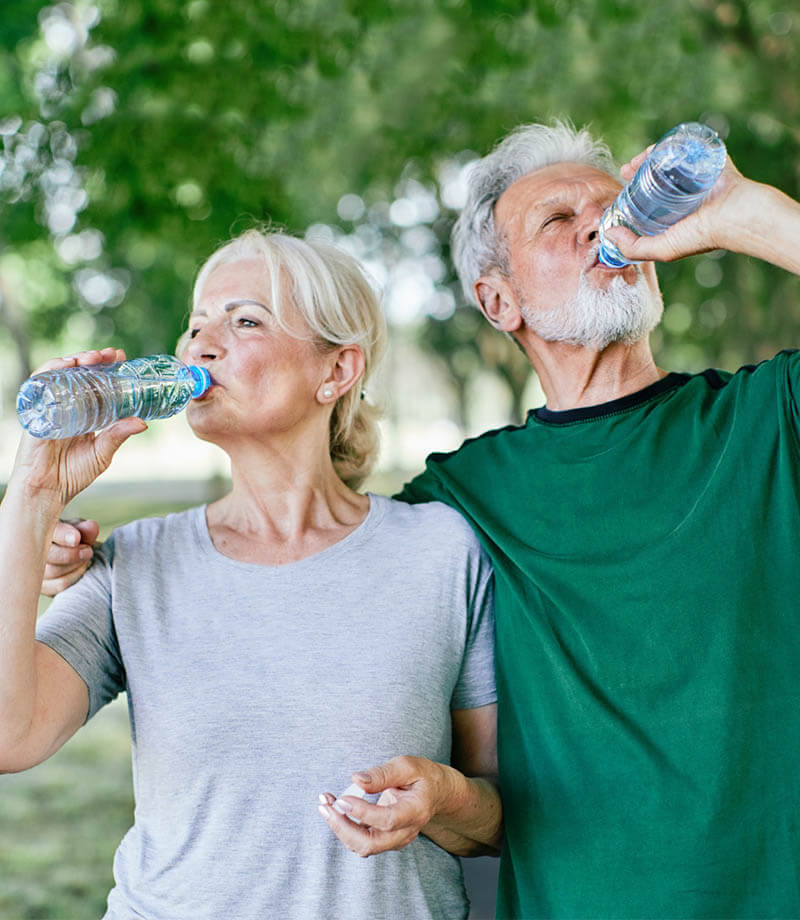
How do you keep seniors from overheating?
All these bodily changes cause a senior population to be comfortable at temperatures from 75-78F. Most younger people find those temperatures too warm to perform seated office work, much less anything more active. This can cause conflict in a senior living community where residents’ comfort clashes with active staff. One way to make a slightly warmer work environment comfortable for staff is to ensure the space is not humid. A hot and wet space feels worse than a warm and dry environment. Humidity removal makes occupants feel less clammy and clothing against the skin is not as irritating or sticky. The dryer air causes anyone sweating to benefit from the evaporative cooling effect, rather than just feeling wet. It also allows space temperatures to trend closer to 75F as a compromise between workers and senior residents.
Capital Improvements
If your building is older and the air conditioning seems to be struggling to keep up with rising temperatures, it may be time for capital improvements. Before replacing equipment, review the maintenance history and be sure to replace dirty air filters to get the best airflow. Look for any other dirty areas such as supply and return grilles with evidence of dark staining which could indicate an airflow blockage. Also, make sure the building is breathing properly by checking exhaust fans and air dampers that are intended to expel stale air and act as a pressure relief. Broken fan motors and stuck damper blades can dramatically affect air conditioning performance.
Fun in the Sun
Make sure your senior residents and family members get out and enjoy the summer warmth and sunshine. Just do it with the right precautions. Make sure there are shaded areas and beverages available for adequate hydration—an enticing and cool respite area to take away the sizzle. We will have to wait a few more weeks to read what the Old Farmer’s Almanac has in mind for the 2024 forecast, but my gut tells me they will predict it correctly. Now if only the farmers published a winning lottery number guide!