
Topeka Presbyterian Manor is a continuing care retirement community (CCRC) offering independent living, assisted living, long-term health care, and short-term rehabilitation that has been serving Shawnee County and the surrounding area since 1962. The community embraced a $1.6 million renovation effort to re-energize the 17-acre campus.
The initial phase of this renovation included a new entrance, assisted living dining room, and renovated library. “This project, like many renovations to older communities, presented a number of challenges,” describes Kelley Hoffman, senior partner at RDG Planning & Design. “One of the biggest obstacles was working with low ceiling heights. The design team worked together to strategically identify locations where the ceiling height could be increased for maximum impact.”
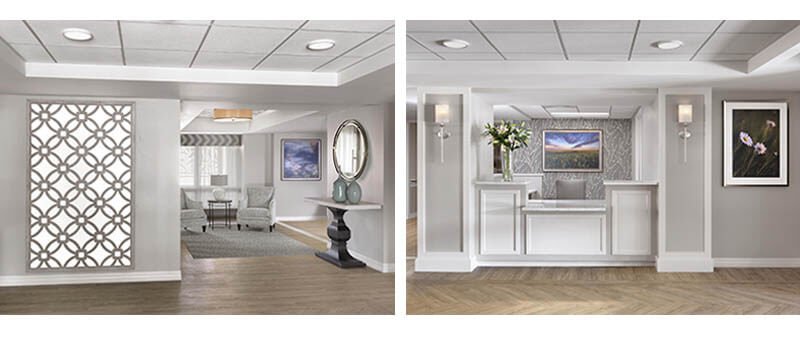
Enhanced entry experience
By readdressing the entry sequence, including the porte-cochere, entry, and lobby, visitors have a refreshed first impression of the community. To further enhance this entry experience, the team repurposed a resident unit to create a new coffee bar and mail area adjacent to the lobby. By relocating the mail area, the team was able to expand and open up the multipurpose meeting space and adjacent library. The other major piece of this project was providing a dedicated dining room for the assisted living residents. Prior to the renovation, the assisted living and independent living residents shared one dining space. This was accomplished by converting an existing activities and storage space into dining and a bistro/serving area.
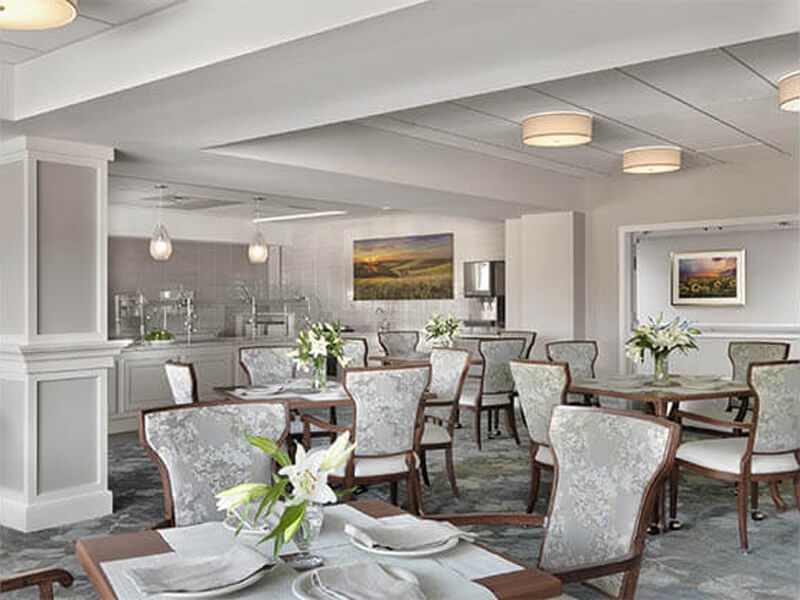
Renovated assisted living dining
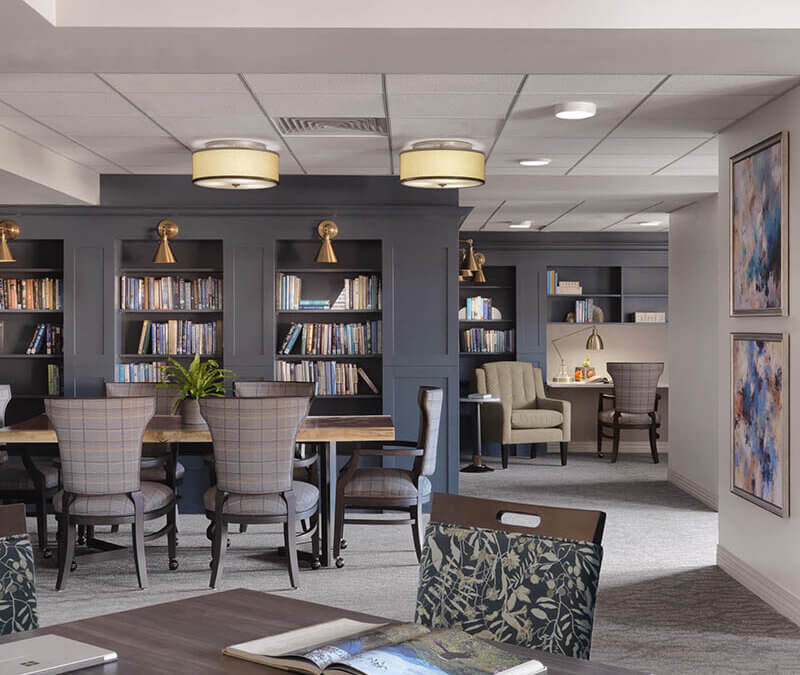
The previous library was dark and cramped. It offered minimal seating which limited the ability of the room to support socialization opportunities. The renovated space improves all of these elements. The goal was to expand the library and connect it with the adjacent multipurpose meeting space. By relocating the mail area, the team was able to double the number of bookshelves. The space now includes multiple seating options—a reading chair, small desk area, and larger group table. This area naturally opens into the multipurpose meeting room and makes the entire area more flexible—tables and chairs can be reconfigured as needed for resident and staff use.
The opened space is enhanced with more access to natural light as well as ambient lighting. The new modern décor is visually striking with sophisticated blue millwork, comfortable upholstered seating, warm woods tones, metal accents, and abstract art.
“One of the greatest things about the Topeka project, I think, is that it was done so on a pretty modest budget,” describes Hoffman.” Low ceilings, inadequate lighting, older ceiling tile and windows with heavy drapery all contributed to a dark and dreary environment. Brighter and lighter finishes, enhanced lighting and some strategically placed focal points really transformed this space. This is a conservative update with big impact.”
Residents, staff, families, and visitors have been blown away by the changes to these renovated spaces. They often mention how much brighter and open the spaces are. They comment on how engaging and well-thought-out the library is, and they love that it can be used in so many capacities. Positive comments have been shared about the contrast in color with the dark built-in shelving and beautiful window treatments. The attention to detail to this design transformation is appreciated and applauded often. Residents are proud of these spaces and are thrilled their families can now see them.
“The AG team is extremely proud to have been a part of both the aesthetic and operational transformations at Topeka Presbyterian Manor, and looks forward to future collaborations with PMMA,” says Russ McLaughlin, senior associate at AG Architecture.
EFA’s 13th Annual Remodel/Renovation Competition featured the Topeka renovation in its Project Gallery. View the Summer 2021 issue of EFA Magazine.
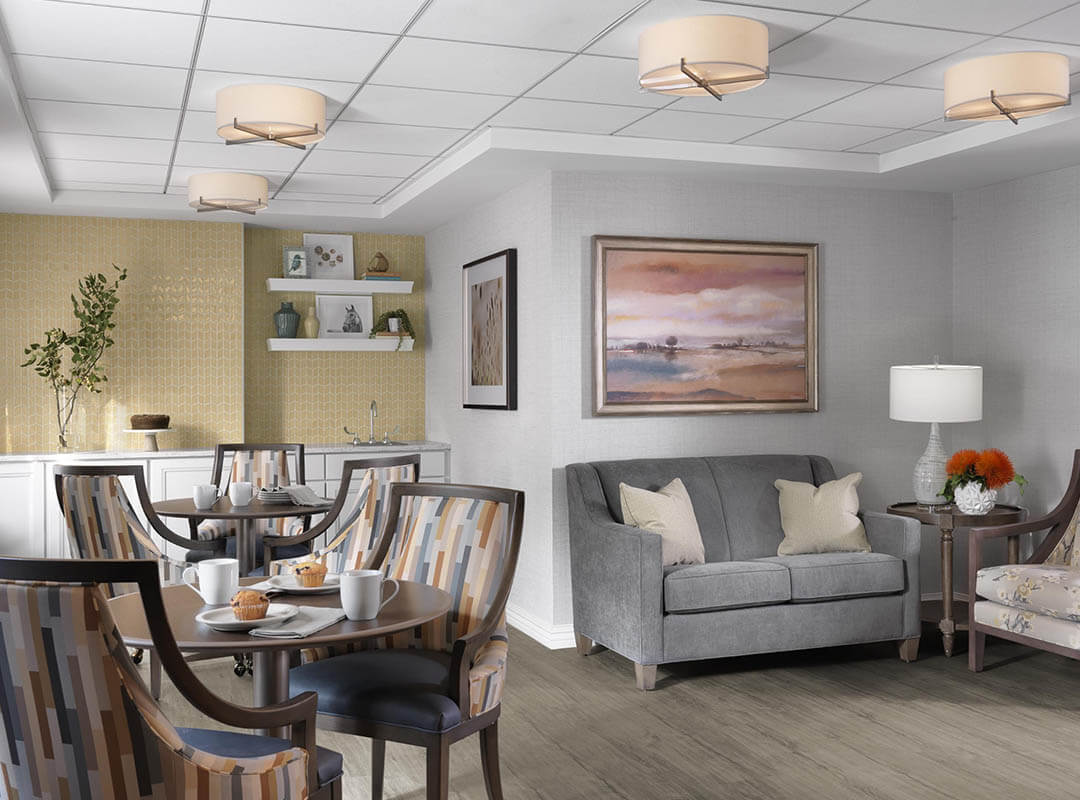
Resident unit repurposed to a coffee bar